
Designing and Developing a Digital Outcome
Year 12 - 7 Credits
2D Animation Project
Tasks
Modular Building Project
Tasks

1 Collect |
Collect information and resources relevant to your project. |
2 Analyse |
Analyse the information and resources you have collected to identify patterns, trends, and insights. |
3 Relevant Implications |
Consider the relevant implications of your findings and how they impact your project. |
1 Collect |
Collect information and resources relevant to your project. |
2 Analyse |
Analyse the information and resources you have collected to identify patterns, trends, and insights. |
3 Relevant Implications |
Consider the relevant implications of your findings and how they impact your project. |

1 Theme |
Develop a Theme to guide your project and focus your efforts. Write it down and use images to visually represent your ideas. |
2 Narrative Development |
Develop a narrative to effectively communicate your project's story and message. Simplify the narrative using Storyshapes. |
3 Editing Shots & Video |
Add examples of shots and angles from Existing Animation or Film Projects that align with your narrative. |
4 Storyboard |
Plan the sequence of shots and scenes to effectively convey your narrative. |
1 Theme |
Develop a Theme to guide your project and focus your efforts. Write it down and use images to visually represent your ideas. |
2 Editing Shots & Video |
Add examples of shots and angles of Buildings or Scenes from Existing Examples that align with your narrative. |

1 Design |
Collect reference materials and inspiration for your design. And show these as you begin to develop your outcome. |
1 Design |
Collect reference materials and inspiration for your design. And show these as you begin to develop your outcome. |

1 Computational Thinking |
Use computational thinking methods, in particular decomposition, pattern recognition and abstraction to identify key components that you need to create in your project. Create a checklist of these components to guide your development process. |
1 Computational Thinking |
Use computational thinking methods, in particular decomposition, pattern recognition and abstraction to identify key components that you need to create in your project. Create a checklist of these components to guide your development process. |

1 Documentation |
Documentation is an ongoing process, use the examples to guide your own documentation efforts. |
2 Feedback |
Feedback is an ongoing process, use the examples to guide your own feedback efforts. |
1 Documentation |
Documentation is an ongoing process, use the examples to guide your own documentation efforts. |
2 Feedback |
Feedback is an ongoing process, use the examples to guide your own feedback efforts. |

1 Screenshot |
Ensure that you regularly take screenshots of your work to document your progress. |
2 Annotate |
Annotate your screenshots to highlight key aspects and provide context for your work. |
3 Develop an Animatic |
Develop an animatic to visualize your project's flow and timing, this will be your final outcome. |

1 Screenshot |
Ensure that you regularly take screenshots of your work to document your progress. |
2 Annotate |
Annotate your screenshots to highlight key aspects and provide context for your work. |
3 Develop a Video Outcome |
Develop a video that shows your final outcome. |
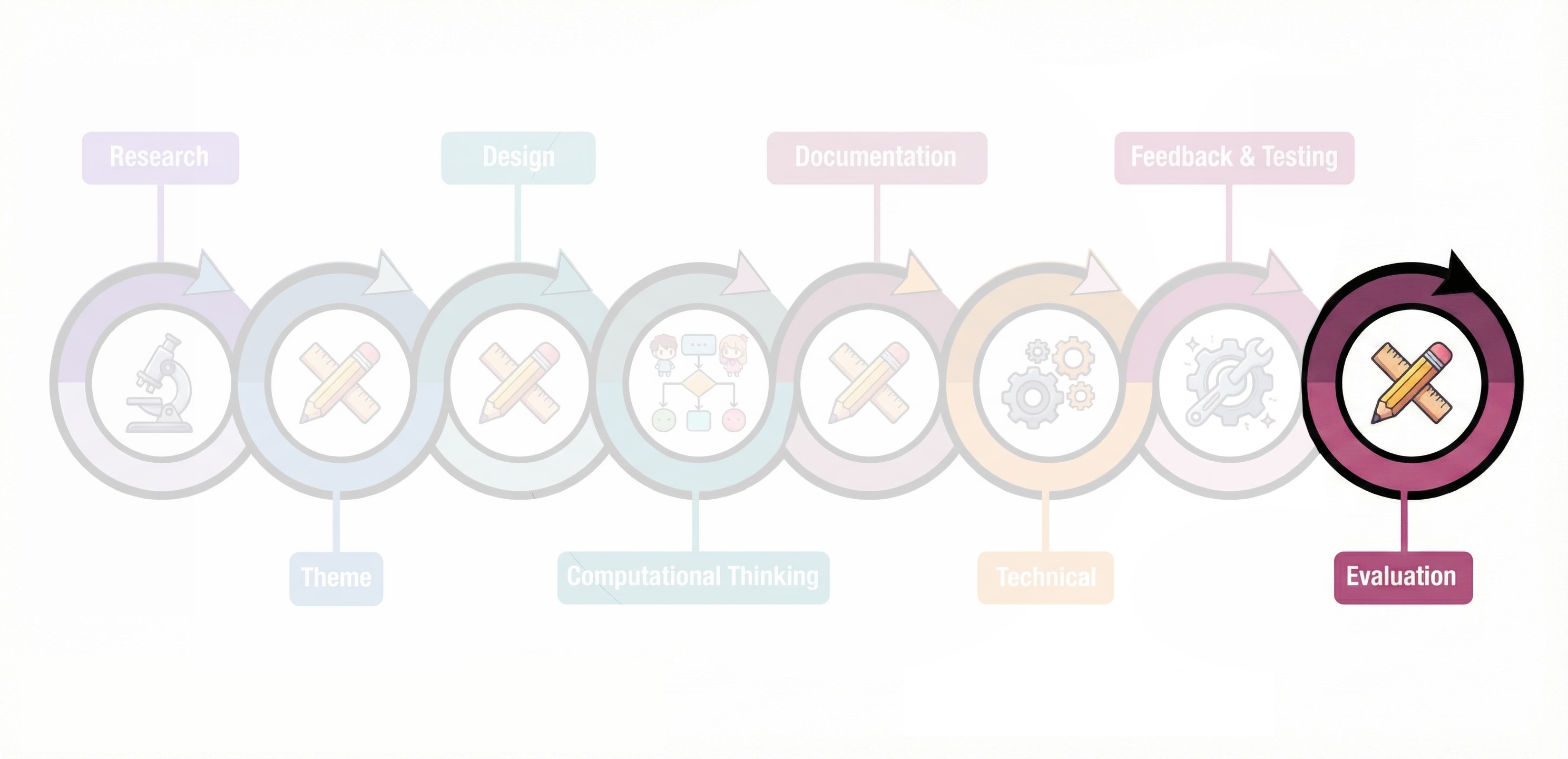
1 Justification |
You must justify why your chosen design decisions (e.g., composition, narrative structure, character development, etc.) are the most suitable for the specific purpose and end users. |
2 Fitness for Purpose |
Provide evidence that your design isn't just "good," but specifically addresses the requirements and specifications identified at the start. |
3 Comparison |
Often involves explaining why you rejected certain design ideas in favor of others, using "evidence-based" reasoning (e.g., "I chose Composition B over A because user testing showed it more clearly represented the intended theme of the outcome"). |
4 Addressing Implications |
You need to show how you handled "Real World" issues. For Excellence, you don't just list them; you show how they shaped the outcome. |
1 Justification |
You must justify why your chosen design decisions (e.g., architectural themes, textures & materials, iterative development, etc.) are the most suitable for the specific purpose and end users. |
2 Fitness for Purpose |
Provide evidence that your design isn't just "good," but specifically addresses the requirements and specifications identified at the start. |
3 Comparison |
Often involves explaining why you rejected certain design ideas in favor of others, using "evidence-based" reasoning (e.g., "I chose Composition B over A because user testing showed it more clearly represented the intended theme of the outcome"). |
4 Addressing Implications |
You need to show how you handled "Real World" issues. For Excellence, you don't just list them; you show how they shaped the outcome. |